
After we were discharged from the hospital we had to stay in Texas for another week. This is due to the Interstate Compact on the Placement of Children (ICPC) agreement. This is a legally binding agreement among all 50 states, the District of Columbia, and U.S. territories.
The ICPC regulates the placement of children across state lines for foster care, adoption, or residential treatment.
It ensures that:
The placement is safe and suitable.
Both states (sending and receiving) approve the placement before it happens.
Legal and financial responsibility for the child is clearly assigned.
Without ICPC, a child could be moved without proper checks, leaving them vulnerable and creating legal issues including who is responsible for care, support, or emergencies. There are several documents and steps that need to take place. A Texas to Colorado adoption included the following:
1. Sending State (Texas) Responsibilities
Texas is considered the sending state.
Texas must prepare and submit the ICPC packet to Colorado, which includes:
Home study and approval for the adoptive family (if done in Colorado).
Child’s medical, social, and legal information.
Financial plan (who covers care and expenses until finalization).
Texas cannot release the child to Colorado until Colorado approves the placement in writing.
2. Receiving State (Colorado) Responsibilities
Colorado reviews the packet to ensure:
Family meets Colorado adoption standards.
Placement is in the child’s best interest.
Colorado approves or denies the placement.
Once approved, Colorado assumes supervisory responsibility until finalization including post-placement supervision.
This process can take anywhere from 1-2 weeks, so we knew we would not be able to make arrangements to go home until we were given the green light from our adoption specialist.
So, for the next several days, we got cozy in our hotel room. We took Oliver to his first checkup, which was provided by a state resource since we weren’t yet home to see our own pediatrician, went out for a few meals and spent hours upon hours snuggling. We were very fortunate that things were moving quickly for us and within five days we were told things should be ready soon so we could start to make our travel arrangements.


We debated about whether or not we should rent a car to drive home or hop on a flight. Since Oliver would be less than two weeks old, if we were to fly, he would need written approval from a doctor saying it was ok to do so. In the end, we got the approval from the doctor and decided to fly since it would get us home faster and I’d keep Oliver wrapped against me for the entirety of the flight.
On our last day in Texas, we signed the remaining ICPC paperwork and packed our bags to head home with our son. The next day, with a 9-day old Oliver, we took our first flight. He was an absolute champ and slept the entire flight snuggled against my chest.

Finally Home
As part of the post-placement supervision process, our Colorado social worker was required to visit us once within 30 days of Oliver’s birth, and then once a month in our home for the next three months. These visits were essential for preparing the post-placement supervisory report—a key document needed before the adoption could be finalized. Under Texas law, that couldn’t happen until Oliver was at least six months old.
I was lucky to have a fully paid maternity leave, which I stretched out to 16 weeks. Three months fully at home and then the last month I went in part-time. This was so incredibly special to me because I got to spend so much one-on-one time with Oliver.


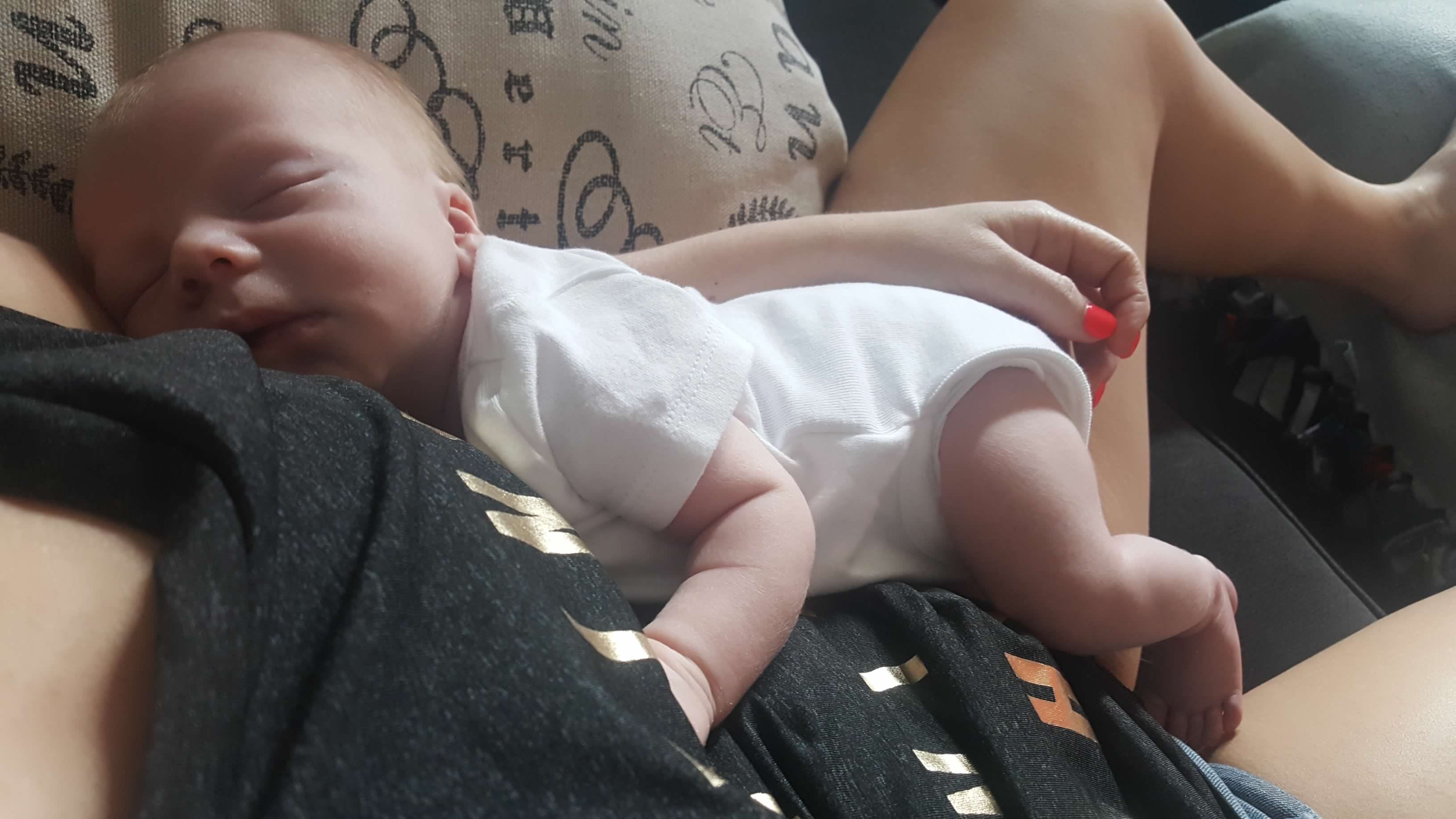
One thing that I really leaned into was baby wearing. Since I didn’t get to carry Oliver in my womb, having him wrapped to me all the time was an absolute must. People thought I was crazy, but I also never used a stroller until he was well past the age of one, and even then, I still mostly preferred to use the baby carrier – something I did regularly until he was three. I personally can’t stand strollers, and it was always easier to get where we needed to get with him just wrapped to me.


We also co-slept until he could transition to a crib. I know not everyone agrees with this and I completely respect each person’s individual comfort level with this, but we used a specialized co-sleeper, and never worried that he wasn’t safe. Because we didn’t have a crib when he was first born and we were living in the hotel, the co-sleeper was a great choice for us and continued to be what we used when we traveled around because it fit easily into a suitcase and didn’t make us so dependent on a crib or pack n’ play.
Knowing that I would eventually be returning to work, we had to start figuring out what we were going to do for childcare. Most of the highly sought after infant daycare options have waiting lists months to years in advance. Since we didn’t know when we would need one, we never got on a list. So instead, we started interviewing nannies. After several interviews we found one that just clicked. Entrusting your child’s care to anyone is terrifying, but we were so incredibly lucky to have found someone who loved and doted on Oliver while we were unable to be with him.
I realize that having a nanny isn’t the most affordable option, which makes me incredibly grateful that we were able to provide this for Oliver. Knowing that during his first year, every time he cried or needed something, he’d receive immediate care—not wait in line with nine other babies—was such a relief. Our plan was to keep the nanny until Oliver turned one, then transition him to daycare once he was eating, walking, and ready to play alongside other kids.
When I returned to work full-time, it was wonderful to be able to text our nanny anytime to check in and receive frequent updates and photos throughout the day. It really helped ease the guilt of being away from Oliver. As I’ve shared previously, I always wanted to be a mother, but my career is also incredibly important to me. Financially, having a stay-at-home parent is not always feasible for people, but I would have been able to do so. And because of this, on many occasions, I had different people try to make me feel bad for not choosing to stay home when I could have. It was difficult not to get frustrated and continue to explain that my job was important to me, and that I valued being seen as more than just a mother.

While being Oliver’s mother is my greatest role, it is not the only thing that I am. It is also vitally important to me that he see women—and his mom—can choose more than just one path. My mother was a stay-at-home mom for 20 years, and I so admire her for that. But that was a choice. A choice she made and wanted for herself. Just as continuing to pursue my own career and independent success is a choice I made for myself.
Tell me, if money wasn’t a barrier, if given the choice, would you stay home or continue to work?
Honestly,
Theresa